The Short Answer
Regular sauna use is associated with meaningful cardiovascular and cognitive benefits in large long-term studies, and the effect appears to scale with frequency. Cold plunge has a narrower evidence base: it is well supported for post-exercise soreness and short-term mood and stress relief, and much less supported for the metabolic and immune claims that circulate online.
To get the most from a session: go in hydrated, do three rounds rather than one long one, keep the cold brief, rest as long as you heated, and finish on whichever temperature you want your body to settle at. Do not drink alcohol before or during, and do not treat the cold plunge as an endurance contest.
What Sauna Actually Does
The best evidence on sauna comes from Finland, which makes sense given that a country of five million has more saunas than cars.
The landmark work is the Kuopio Ischemic Heart Disease Risk Factor Study, which tracked over 2,300 middle-aged Finnish men for more than twenty years and recorded their sauna habits at the outset. What it found was a consistent dose-response pattern: the more often men used the sauna, the lower their risk of dying from cardiovascular causes.
Follow-on analyses of the same cohort and related studies have linked frequent sauna use to lower rates of hypertension, stroke, and dementia. A 2018 review in Mayo Clinic Proceedings pulled this together and concluded the association with reduced cardiovascular mortality held up after adjusting for the obvious confounders.
The proposed mechanisms are reasonable and physiologically coherent: improved endothelial function, reduced arterial stiffness, better autonomic regulation, lower systemic inflammation. Heat exposure puts a mild, repeated load on the cardiovascular system in something like the way moderate exercise does.
The honest caveat
Nearly all of this is observational, not experimental. Nobody randomized thousands of people into sauna and no-sauna groups for twenty years.
That matters, because people who sauna four to seven times a week in Finland may differ from people who sauna once a week in ways the statistics cannot fully separate out. They may be healthier to begin with. They may have more leisure time, more disposable income, or fewer conditions that make sitting in a hot room unpleasant. Researchers call this the healthy-user problem, and the review authors themselves called for randomized trials to settle it.
So: the association is strong, consistent, dose-dependent, and biologically plausible. It is not the same thing as proof that sauna caused the outcomes. Anyone selling you a sauna on a guarantee of a longer life is going further than the data does.
What sauna reliably does in the short term
Set the long-term epidemiology aside and there is a shorter list nobody argues about. A sauna session lowers blood pressure temporarily, relaxes muscle tissue, and produces a measurable drop in perceived stress. Most people sleep better the night of a session. That alone is a reasonable thing to want on a weekend away.
What Cold Plunge Actually Does
Cold water immersion has become the more fashionable half of the pair and has the weaker evidence base. It is worth separating what holds up from what does not.
Reasonably well supported:
- Reduced muscle soreness and improved perceived recovery after hard or eccentric exercise. This is the strongest lane by a distance.
- A short-term lift in mood and a reduction in perceived stress following immersion.
- Improvements in self-reported quality of life and, in at least one large review, fewer sickness absences from work.
Mixed, limited, or mostly extrapolated:
- Fat loss and metabolic “resets”
- Immune system strengthening
- Long-term mental health effects
- Most of the specific dopamine and hormone figures that circulate on social media, which typically come from small studies and get repeated without their original context
Worth knowing: cold immersion immediately after strength training may actually blunt some muscle adaptation. If you are lifting to build muscle, do not plunge right after the session.
None of this makes cold plunge pointless. It makes it a real tool with a narrow evidence base, oversold well past what the research supports. The subjective experience, which is what most people are actually there for, is genuinely worth having.
Safety First, Because This Part Matters
Sauna and cold water are both physiologically demanding. In a controlled setting, for a healthy adult, the risks are manageable. They are not zero.
Talk to a doctor first if you:
- Have any cardiovascular condition, arrhythmia history, or uncontrolled blood pressure
- Have fainted or had episodes of syncope
- Are pregnant
- Have Raynaud’s, cold urticaria, or another cold-sensitivity condition
- Take medication affecting blood pressure, heart rate, or thermoregulation
Non-negotiable rules for everyone:
No alcohol. Not before, not during. Alcohol combined with heat and dehydration impairs the exact judgment you need for knowing when to get out, and it is the single most common factor in sauna-related deaths in countries where sauna use is universal.
Never plunge alone. The genuine danger in cold water is the cold shock response in the first thirty to sixty seconds, which triggers an involuntary gasp and uncontrolled hyperventilation. In a plunge tub this is survivable and unpleasant. In open water it drowns people.
Do not hold your breath or force yourself through panic. If you cannot control your breathing, get out. There is no benefit on the other side of that.
Get out when you want to get out. Lightheadedness, nausea, tingling, or confusion means the session is over. Nothing about this practice rewards toughing it out.
How to Get the Most From a Session
Before you go in
Hydrate, starting hours ahead. You will sweat a meaningful amount. Water before, water between rounds, water after. Arriving already dehydrated is the fastest way to feel awful.
Eat lightly, or not recently. A heavy meal an hour before makes the heat harder to tolerate. Do not arrive on an empty stomach either.
Shower first. It is the norm in Nordic sauna culture, it keeps the space clean, and warm water pre-heats you slightly so the first round comes on faster.
Leave the metal behind. Rings, watches, necklaces, and piercings all conduct heat and will get uncomfortable. Fitness trackers are also unreliable in that environment, so take the session off.
Set your phone down somewhere else. Heat is bad for the device and worse for the point of the exercise.
In the sauna
Three rounds beats one long one. The standard Nordic rhythm is heat, cool, rest, repeated. Roughly ten to fifteen minutes in the heat, a short cold exposure, then rest for as long as you heated. Three cycles fills about ninety minutes comfortably.
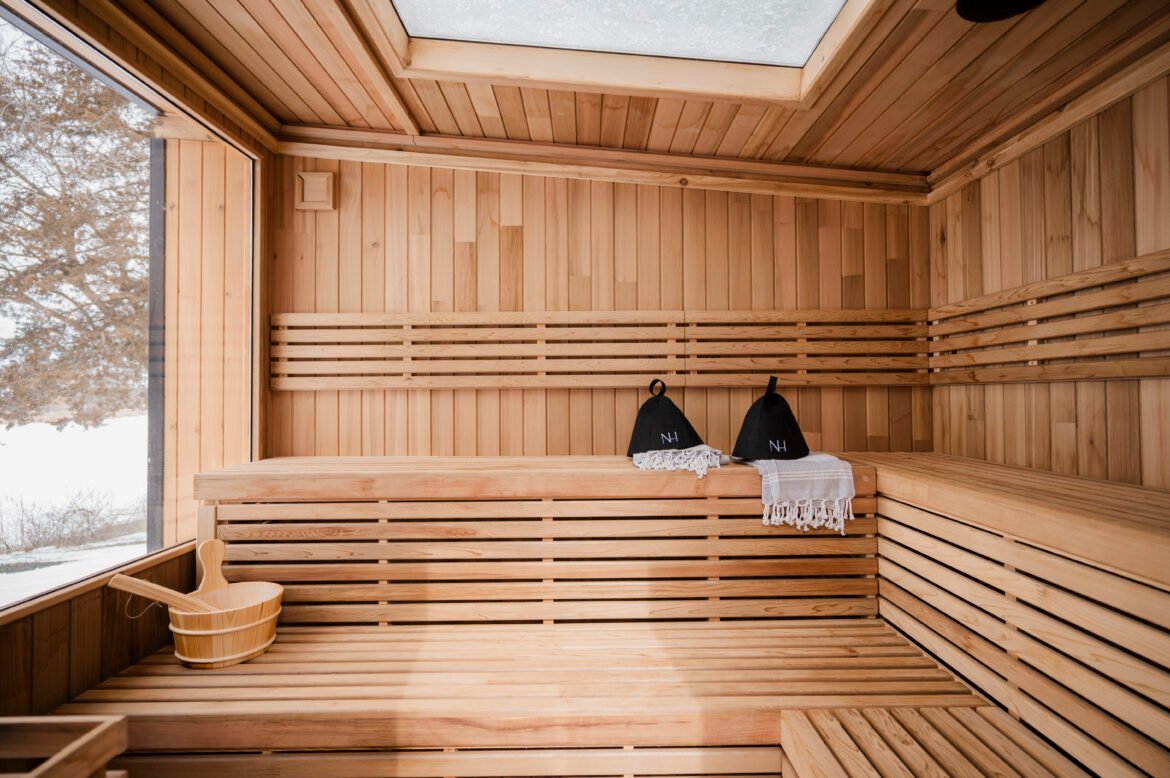
Sit higher for more heat, lower for less. Heat stratifies dramatically. The difference between the top bench and the bottom can be thirty degrees or more. Beginners should start low and work up.
Lie down if there is room. Sitting upright puts your head in significantly hotter air than your feet, which is why people often feel woozy before their body is actually done. Lying flat evens it out.
Stop the round when you want to, not on a timer. The right length is however long feels good, which will change with the day, the temperature, and how you slept. Chasing someone else’s number is how people end up dizzy.
Sit up for a minute before standing. Your blood vessels are dilated. Standing abruptly is how people get lightheaded on the way to the door.
In the cold plunge
Get in deliberately, not dramatically. Lower yourself in rather than jumping. The gasp reflex is easier to manage when you control the pace of entry.
Breathe out slowly and long. The involuntary response is fast shallow breathing. Long exhales are the most effective countermeasure, and they are the whole skill. Once your breathing steadies, usually within thirty seconds, the rest is easy.
Keep it short. One to three minutes is plenty for most people, and thirty seconds is a completely legitimate first attempt. Duration is not the variable that matters. Longer is not better, and past a point it is worse.
Keep your hands and feet moving if you stay in. Still water forms an insulating layer; movement breaks it and makes the cold feel colder, so hold still if you want it gentler and move if you want it sharper.
Do not go straight back into the heat. Give yourself a minute or two at room temperature between the plunge and the next sauna round. The abrupt swing is unnecessary strain.
Between rounds
Rest as long as you heated. This is the step people skip and the one that makes the difference. The rest phase is when heart rate normalizes and the parasympathetic response actually kicks in. Ten minutes in the sauna deserves close to ten minutes of sitting afterward.
Rest somewhere cool but not cold. Outside air is ideal if the weather allows.
Drink water. Actually drink it. A glass between each round.
Do not fill the rest with your phone. The stillness is not dead time. It is the part of the session doing the work.
Afterward
Finish on whichever temperature you want to feel. End on cold and you will feel alert and awake for a while. End on heat and a cool rinse and you will feel sedated and sleep hard. For an evening session, end warm. For a morning session, end cold.
Do not shower hot immediately after. Let your body finish its own cooling first. Twenty minutes is enough.
Eat something and keep drinking water. You have lost more fluid than it feels like.
Expect to sleep well. This is the most reliable and least discussed benefit. Plan the rest of the evening accordingly.
How Often, Realistically
The Finnish data showing the strongest associations involved four to seven sessions a week, which is not a realistic target for most people outside Finland and is not what a weekend visit is for.
Two to three times a week is the frequency most commonly cited as a practical middle ground. And a single session on a weekend away is not a health intervention. It is ninety minutes of feeling good, sleeping well, and doing nothing, which is reason enough.
Frequently Asked Questions
What are the benefits of using a sauna? Large long-term Finnish cohort studies link frequent sauna use to lower cardiovascular mortality, lower risk of hypertension, stroke, and dementia, with a dose-response relationship. In the short term, sauna reliably reduces perceived stress, relaxes muscle tissue, temporarily lowers blood pressure, and improves sleep quality. Most of the long-term evidence is observational rather than experimental.
Is cold plunging actually good for you? The evidence best supports cold water immersion for post-exercise muscle soreness and short-term mood and stress improvement. Claims about fat loss, metabolic boosts, and immune strengthening are much less well supported in humans.
How long should you stay in a cold plunge? One to three minutes is enough for most people. Thirty seconds is a reasonable starting point. Longer is not better, and the benefits do not scale with endurance.
How long should a sauna session be? Roughly ten to fifteen minutes per round, three rounds, with equal rest between. That fills about ninety minutes total.
Should you sauna before or after the cold plunge? Heat first, then cold, then rest, repeated. Finish on cold to feel alert, or finish on heat for better sleep.
Can you drink alcohol in a sauna? No. Alcohol combined with heat and dehydration impairs judgment about when to exit and is the most common contributing factor in sauna-related deaths.
Who should not use a sauna or cold plunge? Anyone who is pregnant, has a cardiovascular or arrhythmia condition, a history of fainting, uncontrolled blood pressure, or a cold-sensitivity condition such as Raynaud’s should talk to a doctor first. So should anyone on medication affecting heart rate, blood pressure, or thermoregulation.
What should you bring to a sauna session? A swimsuit, sandals, a hair tie, and a water bottle. Leave jewelry, watches, and fitness trackers behind.
Try It Without the Logistics
At Nordic Harbor in Center City, every overnight stay includes a private 90-minute sauna and cold plunge session. Private means private: your own reserved slot, no shared facilities, no one else in the room. Ninety minutes is deliberately enough time for three full rounds at an unhurried pace.
This article is general information, not medical advice. If you have a health condition or take regular medication, talk to your doctor before starting heat or cold exposure.