Scandinavian comfort food is built on preservation, not abundance. Cured fish, pickled vegetables, rye bread, dairy, root vegetables, and warm spices are what a long dark winter at northern latitude produces when people need calories that keep. The result is a cuisine that is subtle rather than rich, and organized around warmth and repetition rather than spectacle.
The most important thing on the list is not a dish at all. It is fika, the Swedish practice of stopping twice a day for coffee and something sweet with other people. It is closer to a social institution than a snack, and it is the clearest food expression of hygge there is.
Minnesota inherited a great deal of this directly. Center City, about 45 minutes northeast of the Twin Cities, was the first permanent Swedish settlement in the state, founded in 1851, and the surrounding Chisago County towns are named Lindström and Scandia for a reason.
What Makes Food “Nordic”
Strip away the branding and the through-line is climate.
At the latitude of Stockholm or Oslo, the growing season is short and the winter is long. Historically that meant a diet organized around what survives storage: fish cured, smoked, salted, or fermented; vegetables pickled; grain baked into dense breads that keep; dairy turned into butter, cheese, and cultured milk. Spices arrived through trade and stayed in the baking, which is why cardamom and cinnamon show up in Nordic pastry far more than in the rest of Europe.
A few characteristics follow from that:
Restraint over richness. Nordic cooking is generally less heavily sauced and seasoned than the comfort food of France or Italy. Dill, mustard, caraway, allspice, and juniper do most of the work.
Sweet and savory sitting together. Lingonberry with meat, pickled beets with fish, jam on a savory plate. The combination reads unusual to American palates and is entirely normal there.
Bread as a foundation, not a side. Dense rye and crispbread are structural to the cuisine rather than an accompaniment to it.
Repetition as comfort. The same dishes appear on the same days, in the same seasons, for generations. That predictability is the point rather than a limitation.
The Dishes Worth Knowing
Köttbullar, Swedish meatballs
Smaller and more delicately spiced than the Italian version, usually with allspice and sometimes nutmeg, served in cream gravy with lingonberry jam and often pickled cucumber. The lingonberry is not optional and not a garnish. The tartness is what makes the dish work.
Smörgåsbord
The original spread: a table of cold and warm dishes eaten in a specific order, starting with herring and moving through fish, cold cuts, warm dishes, and finally sweets. The word entered English and lost the structure on the way, which is a shame, because the structure was most of it.
Smørrebrød
The Danish open-faced sandwich, built on dense dark rye and assembled with real precision: pickled herring, roast beef with crispy onions, shrimp with dill and lemon, liver pâté with beets. It is a sandwich that cannot be picked up, which tells you something about the register it operates in.
Gravlax
Salmon cured in salt, sugar, and dill for a couple of days. The name comes from the older practice of burying the fish to ferment it, which is worth mentioning mainly to note that the modern version is a substantial improvement.
Kanelbullar and kardemummabullar
Cinnamon and cardamom buns. The cardamom bun is the underrated one and the more distinctly Nordic of the two. These are the standard partner to fika, and Sweden has a national cinnamon bun day on October 4th.
Ärtsoppa
Yellow split pea soup with pork, traditionally eaten in Sweden on Thursdays, historically followed by pancakes. The Thursday convention is centuries old and still observed in plenty of Swedish workplaces, which is a good illustration of how repetition functions in this cuisine.
Lefse and krumkake
Norwegian rather than Swedish, and the two most likely to turn up in a Minnesota kitchen. Lefse is a soft potato flatbread rolled with butter and sugar. Krumkake is a thin cone-shaped cookie pressed on a patterned iron. Both are Christmas fixtures across the Upper Midwest.
Lutfisk
Dried whitefish rehydrated in lye, and the most notorious dish in the entire Nordic repertoire. Minnesota church basements still hold annual lutfisk suppers, attended in roughly equal measure by people who love it and people who go for the company. It is worth trying once, and honesty compels the note that once is where most people stop.
Glögg
Mulled wine with cardamom, cinnamon, cloves, and orange, served warm with raisins and blanched almonds in the glass. It is the December drink across all of Scandinavia and the single easiest Nordic tradition to adopt at home.
Fika: The Part That Actually Matters
If you take one thing from Nordic food culture, take this.
Fika is a scheduled pause for coffee and something sweet, taken with other people, usually twice a day. Mid-morning and mid-afternoon. It is not a coffee break in the American sense, which is a functional refuel taken at a desk. Fika is the opposite of that. You stop what you are doing, you sit down, and you talk to someone.
Swedish workplaces build it into the day. Swedish homes observe it on weekends. It is a verb as well as a noun, so you can fika with someone, which is the clearest evidence that the social part is the substance.
The connection to hygge is direct. Both are about deliberately creating small pockets of warmth and company inside an otherwise long, cold, dark stretch of year. Neither requires money, planning, or anything you do not already own. Both are, in the end, a decision to stop.
Why Minnesota Eats This Way
Somewhere over a million Swedes emigrated to the United States between the 1850s and the 1920s, driven by crop failure, famine, and land scarcity. A large share of them came to Minnesota, where the lakes, forests, and long winters looked familiar.
Chisago County was where a great deal of that began. Center City, founded in 1851, is recognized as the first permanent Swedish settlement in Minnesota. Lindström and Scandia grew up alongside it. Vilhelm Moberg’s emigrant novels, among the most widely read books in Swedish literary history, are set in this exact stretch of country, and Lindström has the Karl Oskar and Kristina statues to prove the point.
What survived the crossing was, unsurprisingly, the food that carried memory most efficiently. Not the everyday cooking, which adapted quickly to American ingredients, but the holiday dishes: the lutfisk supper, the Christmas krumkake, the cardamom in the bread. Third and fourth generation Minnesotans who speak no Swedish still make lefse in December.
The Gammelgården Museum in Scandia preserves the physical version of this, with six buildings including an immigrant house from 1855 and the oldest Lutheran church building in Minnesota.
Nordic Food at Nordic Harbor
The honest version: Nordic Harbor is not a Scandinavian restaurant, and does not pretend to be one.
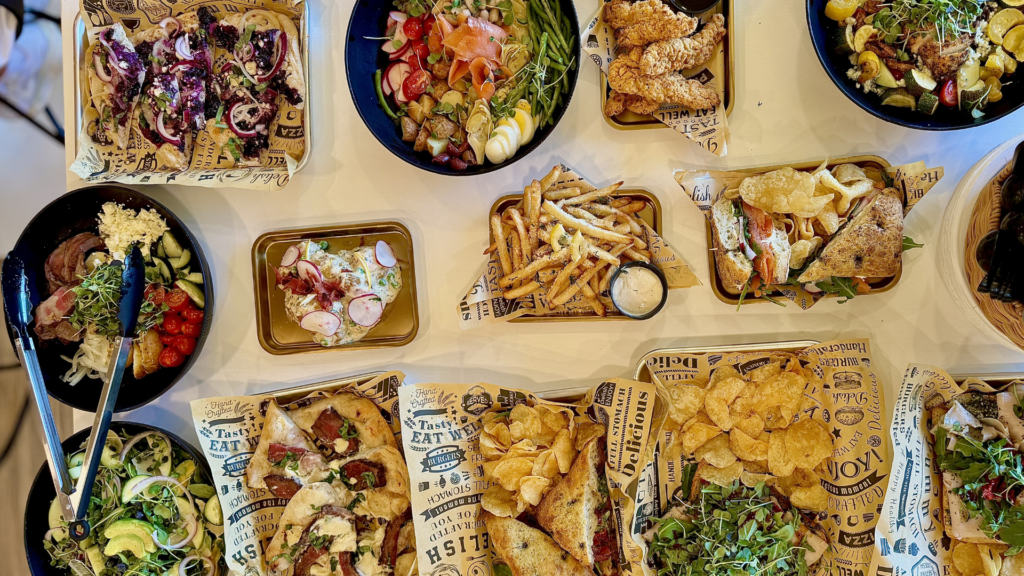
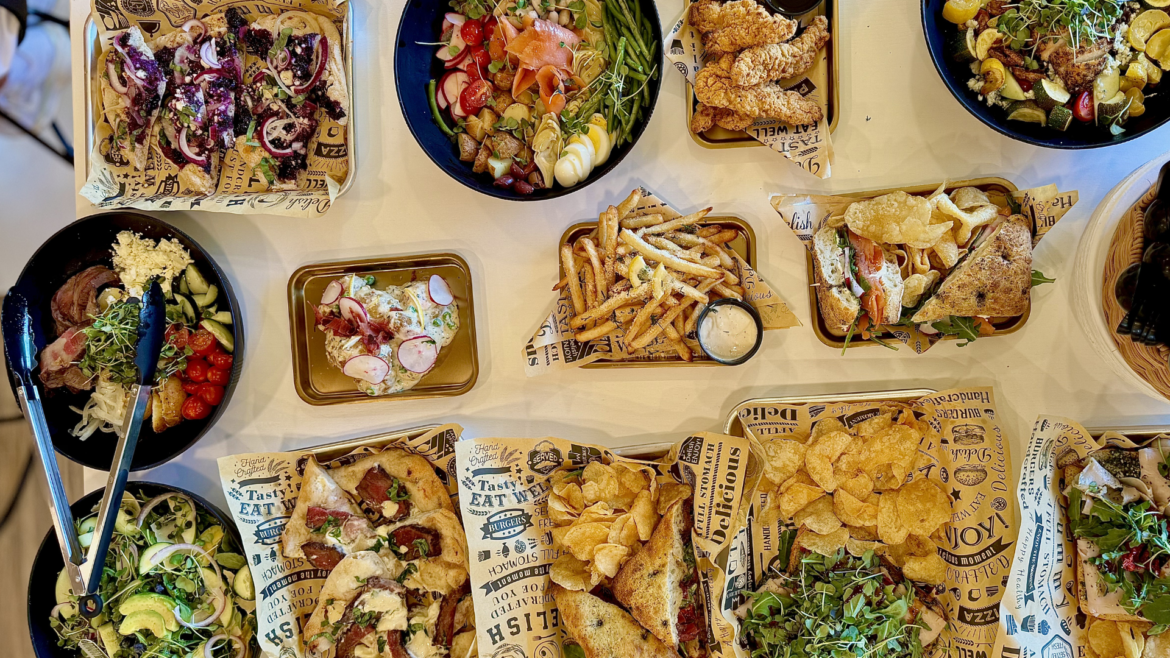
What is on site is Nordic Kitchen a curated restaurant below the rooftop, which covers the practical and the indulgent rather than the traditional. Where scandinavian-inspired cooking meets and easy lakeside pace. Settle in with a bright, fresh bowl share a personal pinsa flatbread, or grab a sandwich and head for the water. Whatever you are in the mood for, our kitchen and bar have you covered. Upstairs on the rooftop, alongside crafted cocktails and a wide beer and wine list.
Where the Scandinavian part genuinely lives is in the shape of the thing rather than the recipes. A market where you can pick up coffee and something sweet and take it somewhere warm with a view is. The rooftop in February, enclosed in glass and heated over a frozen lake, is hygge in the most literal available sense. That is the tradition Nordic Harbor is actually built on, and it happens to be the part of Nordic food culture that matters most.
Nordic Market Hours:
Monday: CLOSED
Tuesday: CLOSED
Wednesday: 12:00pm – 8:00pm
Thursday: 12:00pm – 8:00pm
Friday: 12:00pm – 8:00pm
Saturday: 8:00am – 8:00pm
Sunday: 8:00am- 8:00pm
Where to Find the Real Thing Nearby
If you want traditional Swedish food specifically, the Chisago Lakes area and the wider Twin Cities have it:
-
- Lindström and Chisago City have Scandinavian bakeries and a genuinely Swedish streak, a few minutes west on Highway 8
-
- Gammelgården Museum, Scandia runs Swedish coffee parties, Midsommar, and a Lucia celebration in December, with seasonal food programming
-
- The American Swedish Institute, Minneapolis operates FIKA, its own café, and is the most substantial Nordic cultural institution in the state
-
- Church lutfisk and meatball suppers across the region each November and December, which are the least commercial and most authentic version available
Frequently Asked Questions
What is Scandinavian comfort food? Food built around preservation and warmth: cured and smoked fish, pickled vegetables, dense rye bread, dairy, root vegetables, and cardamom-and-cinnamon baking. It is generally subtle rather than rich, and pairs sweet with savory more readily than most Western cuisines.
What is fika? A Swedish practice of pausing for coffee and something sweet with other people, usually twice a day. It is social rather than functional, and it is built into the rhythm of Swedish work and home life.
What are the most traditional Swedish dishes? Köttbullar (meatballs with lingonberry and cream gravy), smörgåsbord, gravlax, ärtsoppa (yellow split pea soup), kanelbullar and kardemummabullar, and lutfisk.
Why is Minnesota so Scandinavian? Over a million Swedes emigrated to the United States between the 1850s and 1920s, and a large share settled in Minnesota, where the climate and landscape resembled home. Center City in Chisago County, founded in 1851, was the first permanent Swedish settlement in the state.
What is the difference between hygge and fika? Hygge is Danish and describes a quality of cozy contentment. Fika is Swedish and describes a specific recurring practice. Fika is one of the most reliable ways to produce hygge.
Is lutfisk actually good? It is an acquired taste with a texture most first-timers find challenging. The annual church suppers where it is served are genuinely worth attending regardless.
Does Nordic Harbor serve traditional Scandinavian food? Nordic Market carries elevated nordic inspired sandwiches, gorgeous salads, flatbreads, gelato, Scandinavian-inspired sweets and protein packed bowls. The Scandinavian influence at Nordic Harbor is primarily in its ingredients and influenced modern take on fresh nordic inspired bites.
Your Own Version of Fika
Nordic Harbor is in Center City, Minnesota, about 45 minutes from the Twin Cities in the town where Swedish Minnesota began. Nordic Market below, a rooftop over the lake above, and a private sauna and cold plunge session with every overnight stay. One stop oasis.