The Short Answer
You do not need previous boating experience to rent a pontoon. Pontoons are the most forgiving boats on the water: slow, stable, hard to tip, and simple to operate. Most first-timers are comfortable within ten minutes of leaving the dock.
What you do need to check is Minnesota’s watercraft operator’s permit rule, which is currently phasing in by birth year. As of July 1, 2026, anyone born after June 30, 2000 must hold a valid Minnesota Watercraft Operator’s Permit to operate a motorboat, including a rented pontoon. The requirement expands to older age groups in 2027 and 2028. If you were born before July 1, 2000, you’re not yet affected, but verify against the Minnesota DNR before your trip, since the schedule moves every year.
The permit is earned through a DNR-approved safety course, is valid for life, and does not expire.
Why a Pontoon Is the Right First Boat
If you’ve never driven anything on water, a pontoon is where you want to start.
It’s stable. Two or three aluminum tubes under a flat deck make for a platform that barely rocks. People can stand up and walk around while you’re underway without anyone getting nervous.
It’s slow. A cruising pontoon moves at conversational speed. Mistakes happen in slow motion, which means you have time to correct them.
It’s forgiving. There’s no keel to catch, no sail to manage, no plane to get up on. You point it and it goes.
It’s social. The whole design assumes you’re out there to sit around and talk, not to carve turns. Wraparound seating, a table, room for a cooler.
The trade-off: pontoons are not fast, they don’t handle rough water especially well, and they’re affected by wind more than a heavier boat. On a big, choppy day you’ll feel it. On a chain of connected lakes like the Chisago Lakes, that’s rarely a problem.
Before You Book
Decide on a half day or a full day
Half day (roughly 4 hours): enough for a loop of the chain, one swim stop, and drinks. This is the right call for a first-timer, for groups with small kids, or for anyone who wants the afternoon back.
Full day (roughly 8 hours): enough to cruise, anchor, swim, eat lunch on the water, and still have time to sit. Better value per hour, but genuinely a full day. Plan around it, not into it.
Most first-timers overestimate how long they want to be on a boat in direct sun. Half day, first time.
Get your headcount right
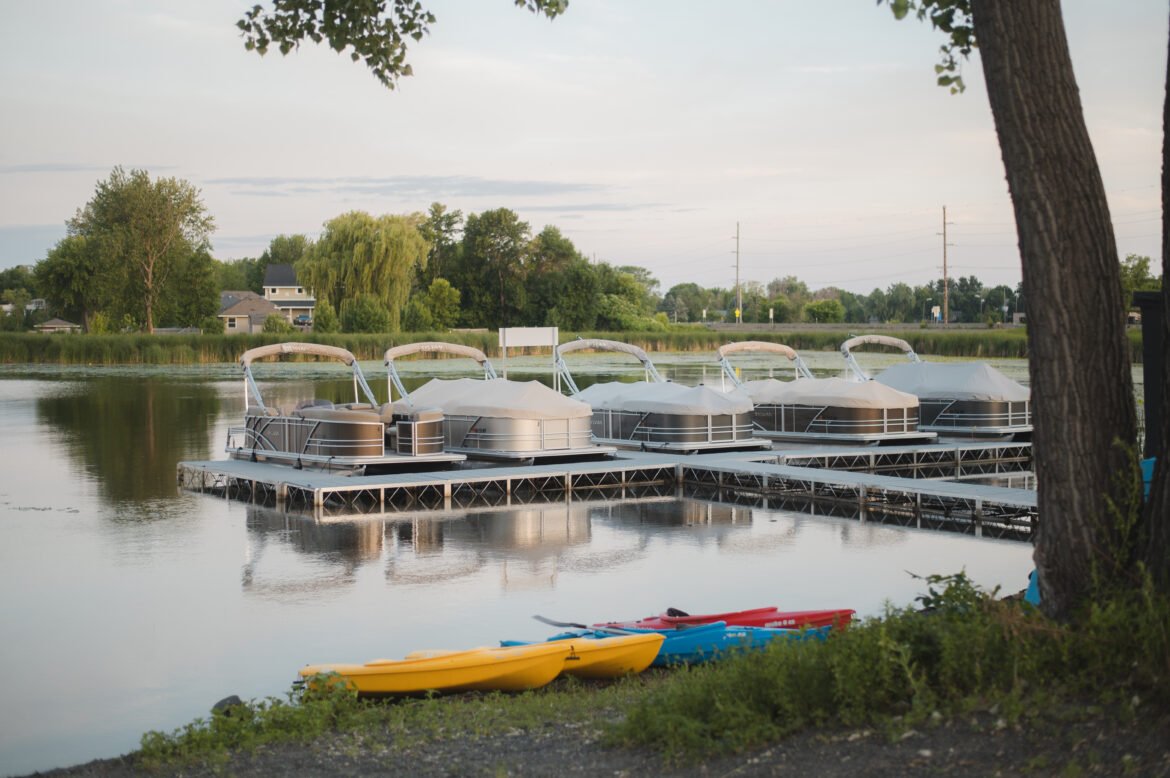
Every pontoon has a legal capacity posted on a plate. It’s not a suggestion, and it accounts for gear and coolers, not just bodies. Book to your actual group size, and if you’re between sizes, go up. Nordic Harbor Pontoons have a capacity of 9 people.
Book earlier than feels necessary
June through August weekends book out well in advance across the region. Saturday mornings are the first slots to go.
What’s Usually Included, and What Isn’t
Typically included:
-
- Life jackets for everyone on board
-
- Required safety equipment (throwable flotation device, fire extinguisher, horn or whistle)
-
- A basic operating walkthrough before you leave the dock
-
- Registration and required paperwork on the boat
Typically not included:
-
- Fuel (usually billed after return, based on use)
-
- Food, drinks, ice
-
- Towels
-
- Bluetooth speaker, though many boats have a stereo
-
- Fishing gear and a Minnesota fishing license, if you plan to fish
Confirm the specifics with your rental when you book rather than assuming. Fuel policy in particular varies, and it’s the line item that surprises people.
The Walkthrough: What They’ll Show You
Every reputable rental gives first-timers an orientation. It takes ten to fifteen minutes and covers roughly this:
-
- How to start and stop the engine
-
- Throttle and shift: forward, neutral, reverse
-
- Steering, and the crucial fact that a boat pivots from the back
-
- The kill switch lanyard, and why you clip it to yourself
-
- Navigation lights, if you’ll be out near dusk
-
- Where the life jackets and safety gear are stowed
-
- How to anchor
-
- What to do if something goes wrong, and the number to call
Ask questions here. Nobody has ever been judged for asking how reverse works. The staff would vastly rather explain it twice at the dock than talk you through it over the phone from the middle of a lake.
Driving a Pontoon: Six Things That Actually Matter
A boat has no brakes. You slow down by pulling the throttle back and, if needed, shifting into reverse. Leave far more space than you would in a car. Approach everything, including docks, other boats, and shorelines, at a speed you’d be comfortable hitting it at.
Boats steer from the stern. Turn the wheel and the back end swings out first. This is the single biggest adjustment for drivers used to cars, and it matters most in tight quarters. When you’re pulling away from a dock, the back is what moves.
Wind pushes you more than you expect. A pontoon is a large flat surface sitting on top of the water. Crosswinds will move you sideways while you’re docking. Account for it before you’re committed, not after.
Give everything a wide berth. Other boats, swimmers, buoys, docks, fishing lines. In Minnesota, you’re required to keep it slow, at no wake, within 150 feet of shore, docks, swimmers, moored boats, and rafts. Assume the swimmer you can see has a friend under the water you can’t.
Understand who has right of way. Broadly: give way to sailboats, canoes, kayaks, and anything under human or wind power. When two motorboats approach head-on, both go right. When paths cross, the boat on your right has the right of way. When in doubt, slow down. A pontoon slowing down is never the wrong call.
Keep the lanyard clipped. The kill switch exists so the engine stops if you go over the side. It only works if it’s attached to you.
Docking: The Part Everyone Dreads
It’s the only genuinely tricky part of the day, and it’s completely learnable.
Go slower than feels productive. The most common docking mistake is too much speed. If you’re wondering whether you’re going slow enough, you aren’t.
Approach at an angle, then straighten. Come in at roughly 20–30 degrees toward the dock, then turn parallel as you close the last few feet.
Use short bursts. Shift into gear, get a little momentum, shift to neutral, coast. Repeat. Sustained throttle is what turns a docking into an event.
Assign jobs before you arrive. One person on the bow line, one on the stern. Tell them what you want before you’re three feet out, not while you’re shouting over an engine.
Never use your hands or feet as bumpers. A pontoon weighs a couple thousand pounds. Fend off with a boat hook or a fender, or let it bump, since the rub rail exists for this.
If it goes wrong, go around. Back out, circle, try again. Every experienced boater has done this. It costs ninety seconds and zero dignity.
What to Bring
-
- Cooler with ice, drinks, and food
-
- Sunscreen, reapplied often, since water reflects and doubles the exposure
-
- Hat that won’t blow off, and sunglasses with a strap
-
- Towels
-
- Dry bag or a sealed zip bag for phones and keys
-
- One layer for the ride back after sunset
-
- Water, actual water, in addition to whatever else you brought
-
- Bluetooth speaker, at a volume that doesn’t carry across the whole lake
Leave behind: glass bottles (many rentals prohibit them), anything you’d be devastated to drop in forty feet of water, and unrealistic expectations about how much you’ll want to be doing.
Alcohol on the Water
You can drink on a boat in Minnesota. The person driving cannot. Boating while intoxicated carries a 0.08 limit, the same as driving, and enforcement on busy summer weekends is real.
The practical solution most groups land on: designate a driver for the day, or swap drivers and stop drinking well before your turn. Sun, heat, and dehydration also hit harder on the water than on land, which is worth planning around regardless of who’s steering.
A Realistic First-Timer Day on the Chisago Lakes
9:30 am. Arrive, paperwork, walkthrough. Load the cooler.
10:00 am. Leave the dock. Spend the first fifteen minutes in open water just getting a feel for throttle and steering before you go anywhere.
10:30 am. Cruise the chain. The Chisago Lakes connect through channels, which makes for a genuinely scenic loop rather than laps around one lake.
12:00 pm. Anchor somewhere shallow. Swim, eat, sit.
2:00 pm. Cruise back the long way. Everyone is quieter and browner than they were at ten.
2:30 pm. Dock, settle fuel, done.
That’s a half day, and for a first pontoon outing it’s close to perfect.
Frequently Asked Questions
Do I need a boating license to rent a pontoon in Minnesota? Minnesota doesn’t issue a traditional boating license. It requires a Watercraft Operator’s Permit, phasing in by birth year. As of July 1, 2026, anyone born after June 30, 2000 must hold one to operate a motorboat. The requirement expands to older age groups in 2027 and 2028. Check current DNR rules before booking.
How do I get a Minnesota Watercraft Operator’s Permit? Complete a DNR-approved boater safety course, available online and self-paced. The permit is valid for life and doesn’t require renewal.
Is it hard to drive a pontoon boat? No. Pontoons are slow, stable, and forgiving. Most first-time renters are comfortable within ten minutes. Docking takes the most practice.
How many people fit on a pontoon? Capacity is posted on a plate on the boat and varies by model, commonly 8 to 12 people. The limit accounts for gear as well as passengers.
Should I book a half day or a full day? Half day for a first rental. Four hours is enough for a loop, a swim, and lunch, and most first-timers find eight hours in direct sun longer than expected.
Are life jackets provided with a rental? Yes, rentals supply a wearable life jacket for each passenger plus required safety gear. Confirm when booking.
Can you drink alcohol on a pontoon in Minnesota? Passengers can. The operator cannot. Minnesota’s boating-while-intoxicated limit is 0.08, the same as for driving.
What happens if the weather turns? Rental operators monitor conditions and will delay or cancel for storms. Head in early if you see weather building; pontoons handle chop poorly, and there’s no prize for staying out.
Ready to Get on the Water
The Chisago Lakes chain is about 45 minutes from St. Paul and 50 from Minneapolis, which makes it one of the easiest boating days in the metro’s reach. Nordic Harbor rents seasonally in Center City, with lodging, a rooftop bar, and a private sauna and cold plunge session waiting for you when you get off the water.
[Check boat rental availability →]